
October 6, 2026
The pleasure of a thoughtful kitchen
The Delicious Side of Eating Well
Flavor, nourishment and everyday ease.
 Oct. 6, 2026
How small kitchen experiments are shaping my approach to flavor, nourishment and everyday ease.
By Sheran Jackson · October 6, 2026
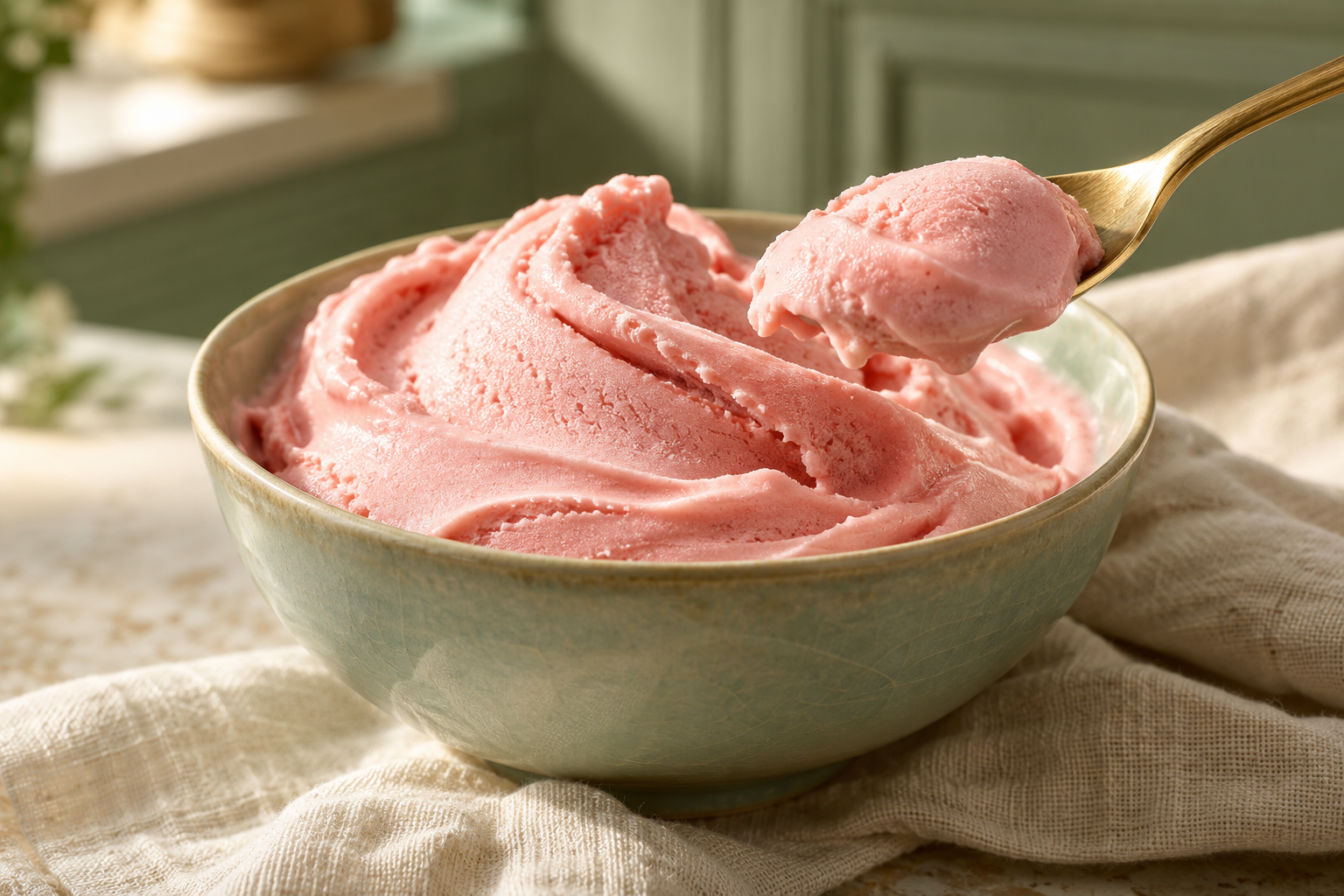
Cool, creamy and wonderfully smooth. Each spoonful had that soft, melting texture I love, with a bright sweetness that made me want to savor it. Mmm. This was good.
To me, it tasted just like soft-serve ice cream. I had made it in my own kitchen, and I was already imagining little flecks of chocolate and the crunch of walnuts in the next batch.
And the lovely surprise: banana and strawberries, blended into “nice cream.”
That is the kind of cooking that interests me. I want food that tastes wonderful, supports the way I want to eat and fits the energy I have for preparing it.
I enjoy asking: What could I change? What would make this easier? Will I love the result enough to make it again?
I am discovering how much pleasure there can be in eating this way. My food is so satisfying that I seldom overeat.
That is my own experience, and it is helping shape what I want to share: food that tastes wonderful and leaves me feeling content.
A new Virginia Tech study gave me another reason to think about those questions. Published October 5 in Nature Metabolism, it found different short-term metabolic responses to ultraprocessed and comparison meals with closely matched nutrients.
The study involved 57 younger, healthy-weight adults; 32 completed both metabolic testing and brain scans.
It offers a reason to look beyond nutrient totals, while leaving many questions about specific ingredients and processing methods unanswered. [1] [2] [3]
For me, that research opens a conversation about what happens in our own kitchens.
The pleasure of my nice cream was its flavor and texture. The banana and strawberries made something I was happy to eat.
The chocolate-and-walnut version is still an idea to test, and I want to see how much chocolate gives me the taste I am looking for.
That small experiment captures my approach: begin with something appealing, try a thoughtful change and pay attention to the result. I want nourishment and enjoyment at the same table.
I have been exploring seasonings such as cinnamon and white pepper, the tang of balsamic vinegar, and substitutions such as cottage cheese in place of cream cheese. My flaxseed pancakes are another experiment in adapting familiar food.
Each change raises two questions for me: Does it taste good, and does it help me meet my goals? A substitution deserves a taste test.
Any claim that it improves nutrition deserves a closer look at the ingredients, amounts and serving size.
I especially appreciated the American Heart Association’s explanation that convenient foods can belong in a healthy eating pattern. Frozen vegetables and canned beans can be useful choices.
Its guidance includes comparing sodium, added sugars and saturated fat, and choosing produce without salty sauces or sugary syrups. [4]
The association also recognizes differences within the ultraprocessed category: some whole-grain breads and low-sugar yogurts can fit a healthy diet. A processing label alone does not tell us everything about a food’s nutritional value. [5]
That leaves room for a kitchen that works in real life. I want readers to have options that suit their budgets, tastes and energy. Thoughtful choices should make a good meal feel more possible.
My residual-heat experiments are part of this same curiosity. I am exploring how to use heat already in the pan or oven, reduce active cooking time and avoid burning food while keeping the textures I enjoy.
These are experiments to document. I want to record what works, what needs adjusting and how I check that the food is properly cooked.
The Virginia Tech study did not test my recipes or cooking methods; their results must stand on their own.
As I develop my cooking system, I want to capture the choices and techniques I can use again: how I build flavor, adapt ingredients, manage heat and create textures I enjoy.
My kitchen notebook will record what I wanted to make, what I changed, how it tasted and what made the preparation easier.
The banana-and-strawberry nice cream belongs in that notebook now. The chocolate-and-walnut version will earn its place after I try it.
Each discovery helps me shape the EnergyLiving cooking system: thoughtful choices, useful techniques and the pleasure of food I truly enjoy.
What food do you love—and what small change would you enjoy trying the next time you make it?
© 2026 Sheran Jackson. All rights reserved.
1. Hutelin and colleagues. Metabolic and neural responses to ultraprocessed foods: a randomized, controlled, crossover study. Nature Metabolism, October 5, 2026. Read the abstract on PubMed.
2. Virginia Tech. Study dataset and supporting information. Version 2, October 5, 2026.
3. Virginia Tech news release, reproduced by News-Medical. Ultraprocessed meals produce distinct metabolic and brain responses. October 5, 2026.
4. American Heart Association. Can Processed Foods Be Part of a Healthy Diet? Reviewed July 31, 2024.
5. American Heart Association. Are Ultraprocessed Foods Good or Bad? Reviewed August 11, 2025.
Cover: AI-generated editorial illustration; not a photograph of Sheran’s own dessert.
October 6, 2026
The pleasure of a thoughtful kitchen
Flavor, nourishment and everyday ease.